of place amongst the big cats. This cat once
roamed far and wide, and until the Pleistocene
about 10,000 years ago it was considered
the most wide spread land mammal next to
humans.
live up to 20 years while in captivity. Typically
found in grassland or savannah areas lions
are known to take to the bush or a forest in
essence wherever they can find their next meal.
As social animals they live in prides and unlike
other cats, which are typically loners, they live in
large family groups.
offspring and a small number of adult males.
Adult males who are thrown out of a pride often
pair up with other males with whom they hunt
and live with in a bachelor group. While his
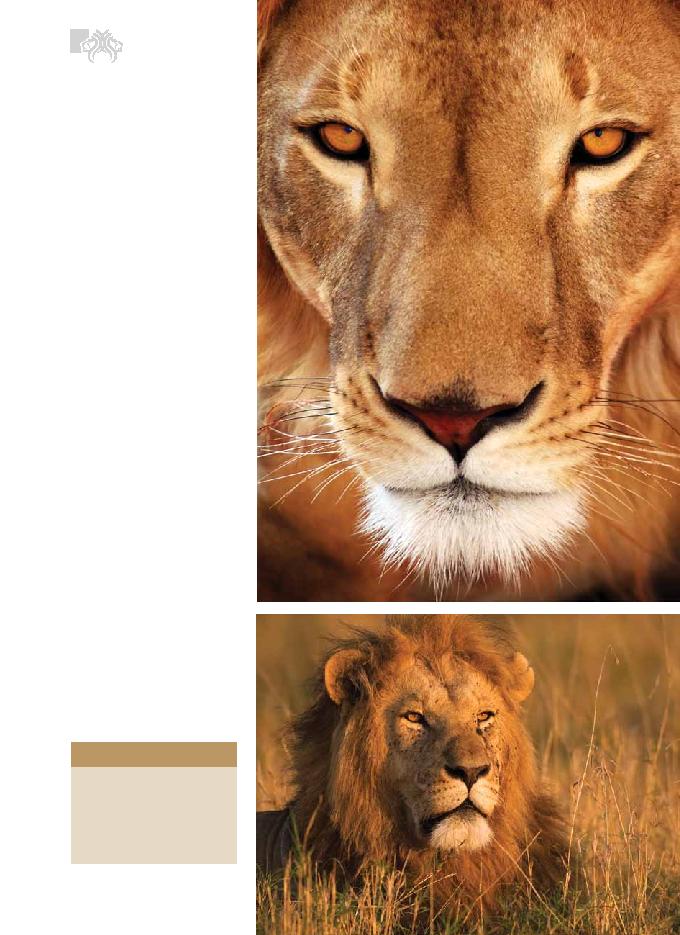
mane shows all the glory and prowess of an
adult male, the female is slightly less impressive
yet no less deadly. In fact the female lions do
most if not all of the hunting, chasing their prey
down in packs.
if opportunity knocks. Lions are most active at
night and their nocturnal activities leave them
relatively docile during the day, in fact for up to
20 hours a day, when they can be found cat-
napping in shady areas throughout the African
savannah.
has been referred to as tawny, yet it is more
distinctively yellow, reddish or a dark ochre
brown. The lion is the only member of the
cat family to display what is known as sexual
dimorphism where the male and female are
distinctively different. They communicate by way
of a number or growls, grunts and the distinctive
roar yet also display a number of tactile gestures
such as head rubbing, licking and nuzzling.
rare cases have they been reported to do so.
While the lion is not endangered as yet, it is a
threatened species with its hide, teeth, claws
and bones being highly desirable in many
eastern medicine practices.
Phylum: Chordata
Class: Mammalia
Order: Carnivora
Family: Felidae
Genus: Panthera
Species: P. leo