2013 MARCH / Vol. 5 / No. 3 /
GA
39
the SAA A319 at King Shaka Airport and showed
me what it was all about.
The Airbus flight deck layout is conventional
with the exception that
there is no Yoke, this is replaced by a FBW side
stick creating fantastic
space and providing a tray table which is a superb
tool. The general layout is divided into the Instru-
ment panel, glare-shield, centre console, overhead
panel, side panels and aft panels.
The instrument panel and flight instruments
are arranged in a modern EFIS display layout. The
screens are centred in front of each pilot, the PFD
(primary flight display) and ND (navigation dis-
play). The 2 ECAM (electronic centralised aircraft
monitor) screens are in the middle of the instru-
ment panel, the top screen being the EWD (engine
warning display) and the bottom the SD (systems
display). To the left of the ECAM are standby flight
instruments being the ISIS, which is a full "mini"
PFD standby Instrument and below that the
Standby RMI.
The landing gear selector, flap indicator, auto-
brake and nose-wheel steering controls are located
to the right of the EFIS displays on the centre
instrument panel.
Above the instrument panel on the glare shield
is the FCU (flight control unit) which is used to
control flight through the flight directors and
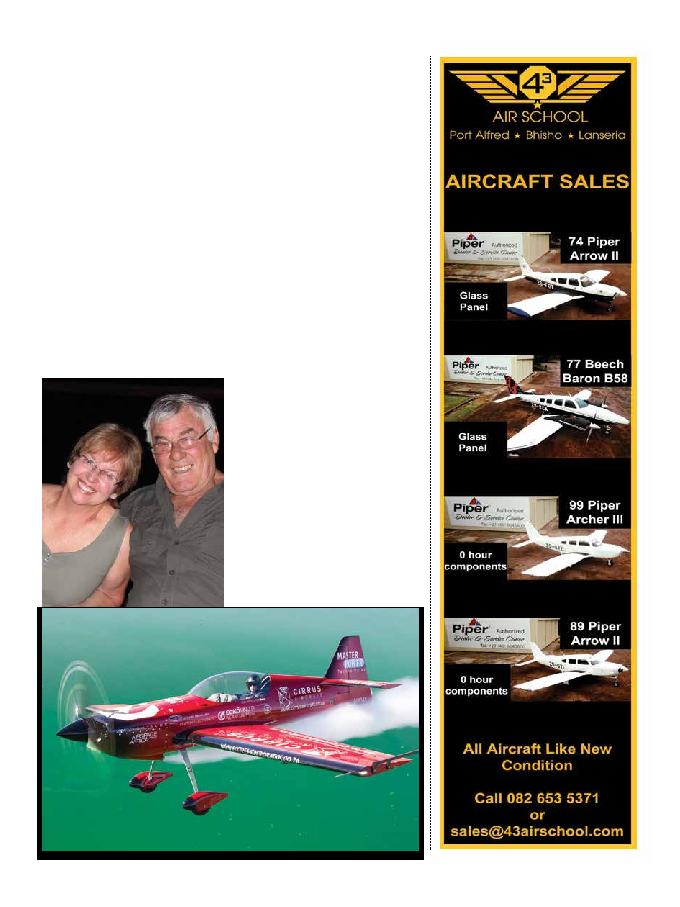
Left: Mr and Mrs Derek Hopkins, Senior.
Dereck is also a commerical pilot.
Below: Nigel completing a sequence for the cameras.
auto-flight (auto pilot and auto thrust) systems, the
EFIS control panel to select various functions and
displays on the EFIS screens as well as the warning
and caution alert lights.
Between the pilots is the centre console and at
their fingertips are the MCDU's (multi function
display units which are the pilots interface with
the FMC's (flight management computers) and the
ECAM controls which allows the pilots to scan a
pictoral layout of each system and to monitor the
system through the ECAM displays.
The centre console houses the thrust levers.
These can be used as conventional thrust levers as
well as "switch positions" depending on the
phase of flight and are monitored by the
engine Computers.
Behind the thrust levers are the engine start
switches and the speed brake lever left and flap
lever right. Either side of the levers are the radios
radar and transponder equipment and a data printer
which is used for electronic load-sheets, weather
and technical support. At the back of the centre
console is the park brake, rudder trim and a manual
gear extension handle.
The overhead panel contains the light switches,
system controls and the Engine and APU fire
handles. The Airbus philosophy is that of lights out
is normal so at a quick glance the Crew can monitor
the system switches efficiently.
The Airbus FBW family has fly by wire control
sticks located on the side panels. Also on the side
sticks are the PTT radio switches and the autopilot
disconnect switches which are also used as take
over push buttons. With this system there is no
direct mechanical cable link between the sticks and
the flight controls. The fbw system sends elec-
tronic signals through the primary and secondary
flight computers to the elevator, aileron and rudder
hydraulic actuators which then move the control
surfaces. Also located on the side console are the
steering tillers, oxygen masks and the electronic
flight bags.
Behind the crew is the aft panel which houses
the computer reset switches and circuit breakers.
There are also two fold out jump seats for additional
crew. And that's it!! ·